

Humanoid Robots Could Reach Homes Within Five Years, Expert Says
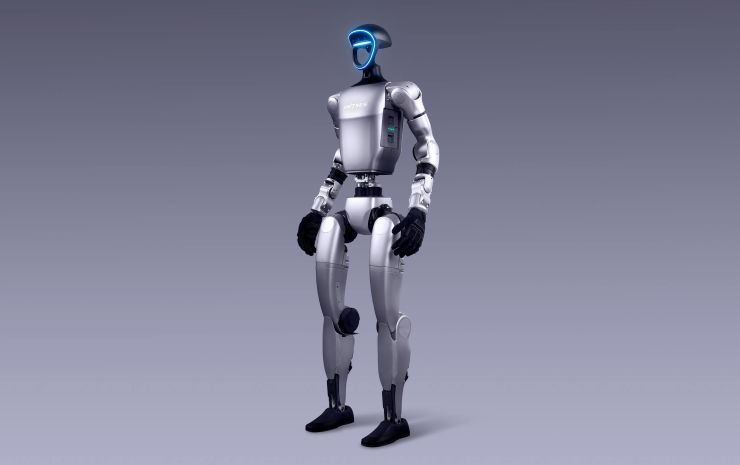
Beijing hosted the World Humanoid Robot Games this week. Over five days, the machines demonstrated skills in running, fighting, weightlifting, and obstacle avoidance.
The robots, belonging to more than 600 teams from 16 countries, highlighted the fast pace of development in humanoid robotics, driven mainly by artificial intelligence.
One of the leading companies in the sector is China's Unitree. According to Álvaro Machado, a neuroscientist and artificial intelligence expert, the company's pace of evolution is surprising.
"It starts in 2016 with robodogs, those robotic dogs, and suddenly has a big growth spurt with several launches," he said during an appearance on CNN Brasil's Prime Time.
According to him, Unitree is currently the world's leading company in the humanoid robot segment.
When will robots reach our homes?
The prospect of having humanoid robots performing everyday household tasks does not yet have a precise date, but Machado estimates that, in some homes, this could happen within five years.
"We're going to have robots that are part of household activities in homes where the cost of these activities is very high," he explained. He added that initial adoption should occur mainly in the more advanced economies and for specific functions, such as folding clothes or cleaning the floor.
The neuroscientist also stressed that, paradoxically, household tasks are more complex for a machine than spectacular physical feats, such as running or jumping. This is because everyday activities require fine calibration of force, speed, and precision of movement — something still challenging for current robotic systems.
The artificial intelligence behind the robots
The AI that powers humanoid robots is not the same as that used in language tools like ChatGPT.
According to Machado, what underpins robotic activity is "an artificial intelligence that learns from the real world."
For him, the most important thing for a robot to function properly is that, when it is in completely new situations, it be able to identify what it cannot do — and not necessarily that it produce creative responses. "Doing the basics is more than enough for it to generate a leap, and we're still waiting for those basics," he concluded.